Hello, properly
I'm Tejas. I build things, and the board above is a more honest document than any CV I could give you.
The résumé version is short. I trained as a chartered accountant (CA), spent five years learning how to take a company apart and find out what its numbers were actually made of, and then left to teach myself to build software. I run an AI lab now. Those two halves fit together better than they sound like they should: audit is mostly the discipline of refusing to believe a thing until you have seen what it rests on, which turns out to be a very useful reflex when everyone around you is extremely excited about machines that sound confident.
Films
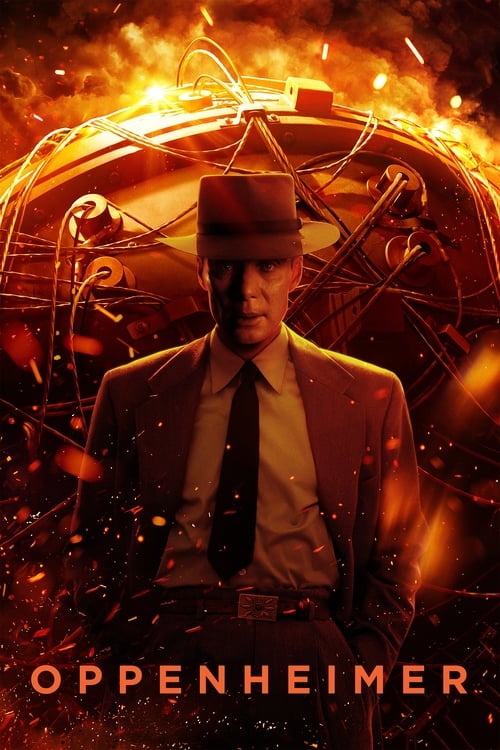
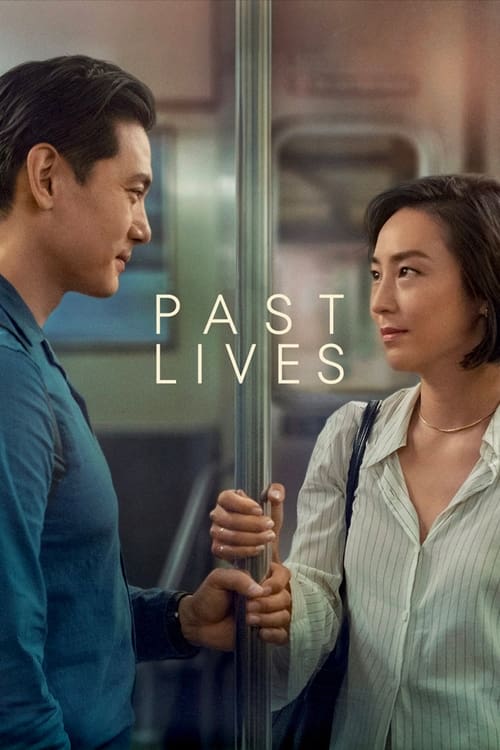
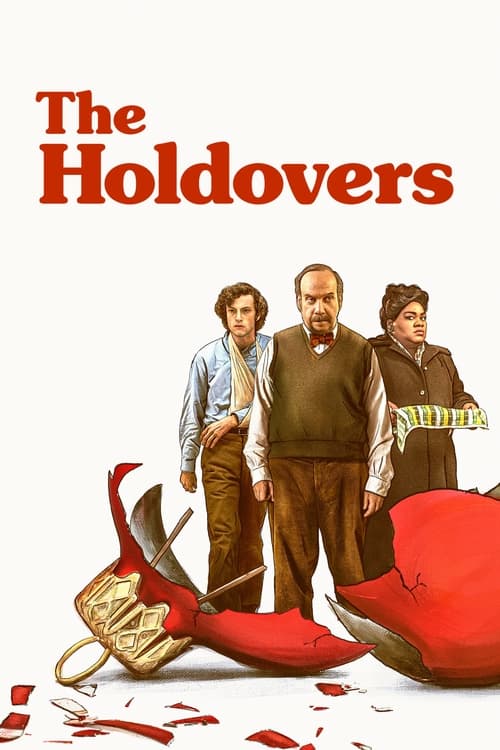
I watch a lot of them and I argue about them more than is strictly reasonable. Life Is Beautiful is the one. A man convinces his son that the worst place on earth is an elaborate game so the boy comes out the other side with something still intact, and I have never once made it through the ending. Past that I'm drawn to films with the confidence to take their time, The Shawshank Redemption, Past Lives, Anatomy of a Fall, The Holdovers, Oppenheimer. Things that trust a silence to do some of the work.
Books
Mostly I read to learn how to write. George Saunders' A Swim in a Pond in the Rain is a class on Russian short stories that is secretly a class on paying attention. Verlyn Klinkenborg's Several Short Sentences About Writing ruined my prose in the best available way. I now read everything I write out loud, and I am embarrassed by roughly a third of it.
Coffee
I do my best thinking in coffee shops. Not really for the coffee, though the coffee matters, but because a laptop, a notebook and no way to get up and do something else is the most productive arrangement I have found. Most of what I have built started as biro on a ruled page in a café in Chennai.
Water
The Marina or Marine Drive, and I refuse to choose. I surfed for a while, badly. I think best walking next to something large and completely indifferent to me.
Now · Winsen Labs
Reimagine and rebuild.
An AI laboratory. We build the AI for financial services, manufacturing, logistics and healthcare: we go and find what AI has made newly possible, then work with teams to build it for real. Work is better with Winsen.
Open source · Platos
The agent runtime, and you can run it yourself.
Platos is my open-source contribution: the runtime for building, shipping and operating AI agents on infrastructure you own. Agent loop, MCP gateway, knowledge-graph memory, evals, observability, approval workflows and budget caps. Model-agnostic, monitored by default, no lock-in. Apache 2.0, and self-hostable from a single docker compose file.
Open research · IHMR Labs
What would it take to keep a billion people healthy, continuously?
Healthcare is organised around episodes. You get sick, you get treated, you disappear until the next episode. IHMR asks what it would take to maintain the health of every person in India from birth through the end of life instead: understand the state, identify what should happen next, coordinate the intervention, verify it happened, update the state, repeat.
The blocker was never the idea, it was coordination. Individualised plans for more than a billion people needed impossible amounts of administrative labour. AI may change that constraint, so IHMR treats AI as coordination infrastructure and explicitly not as clinical authority. All of it is built in the open.
Also now · Fanpit
Where it started, and it is still running.
Fanpit is an events and community platform, made in Madras. I set out to build infrastructure for brands and learned that the ones that grew were never the ones with the best tools, they were the ones with the strongest communities. Brands and artists host on it, and communities across Chennai, Mumbai, Hyderabad and Kochi run their shows, open mics and gigs through it.
Find something that moves you at fanpit.live.
Research · Neural DNA
Networks should grow their topology the way brains do.
Default disconnected, with metabolic cost forcing selectivity. A tiny genome decides how the network grows, and the same idea travels from artificial networks to real biological ones. Three papers so far.
Papers on Zenodo, code on GitHub, genomes on Hugging Face.
Watched and read
Keeping score of what I consume.